The Best AI Running Coach Apps for Garmin Users in 2026
Garmin Coach is built into your watch, but it's not the only option - and increasingly, not the best one. Here's how the AI coaching landscape looks for Garmin runners in 2026.
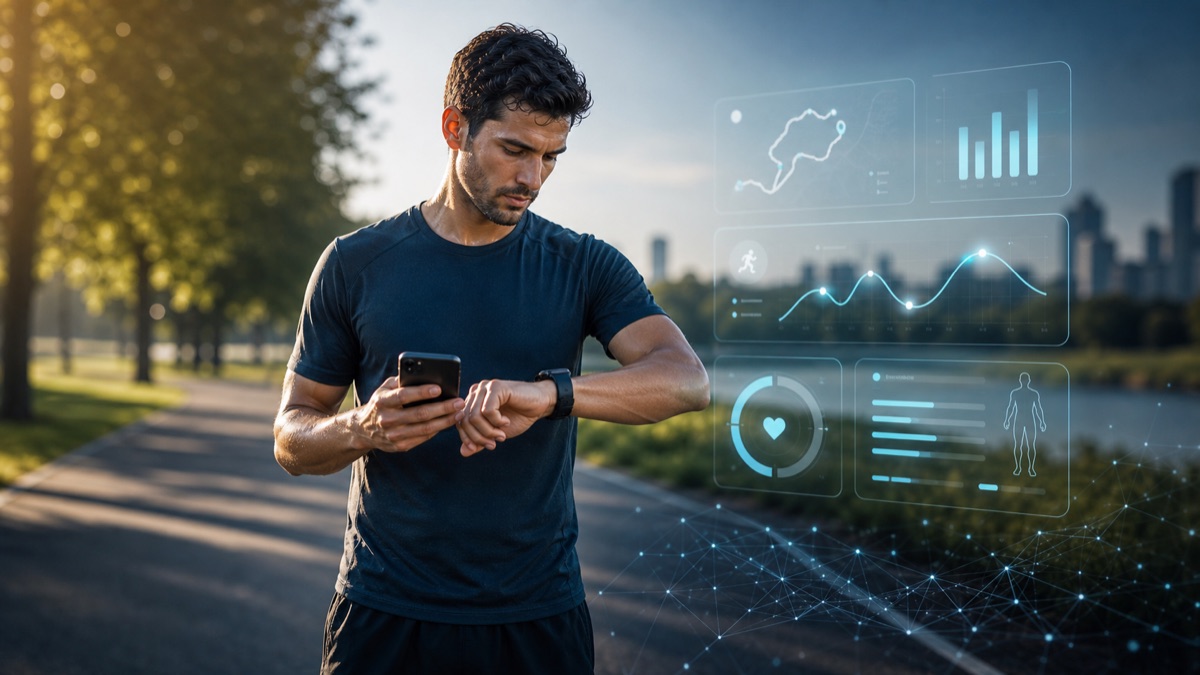
If you own a Garmin watch - and a lot of serious runners do - you have a built-in coaching feature called Garmin Coach. It's free. It's reasonably well-designed. It will absolutely train you for a 5K, a 10K, or a half marathon if you let it. So why are so many Garmin users running their training through third-party AI coach apps?
Because the gap between "a generic plan that adapts a little" and "a plan built specifically for your fitness, recent training load, and goal race" is much wider than Garmin's marketing implies. And in 2026, with more options than ever, choosing the right coach for your watch is a real decision.
What Garmin Coach actually does
Let's be fair to Garmin first. The built-in Garmin Coach feature is genuinely useful, especially for runners who don't want to think about training structure. You pick a coach (Greg McMillan, Amy Parkerson-Mitchell, or Jeff Galloway), choose a goal (5K, 10K, or half marathon), and Garmin builds you a plan that adjusts week to week based on your runs.
It's free. It's already on your watch. It pushes structured workouts to your wrist with pace targets and rest periods. The plans are sound - the coaches behind them are real, and the structure is rooted in conventional periodisation.
Where it falls short is in flexibility, depth, and personalisation. Garmin Coach plans are template-driven. They adjust mileage and intensity within fixed parameters, but they don't truly redesign themselves around your specific fitness data, recent fatigue, or goal pace. There's no marathon plan. No ultra plan. No support for plan changes mid-cycle if life intervenes. And the coaching voice is a small set of pre-recorded Garmin coaches saying generic things - not a system that actually adapts to you.
For runners new to structured training, Garmin Coach is a perfectly reasonable starting point. For runners who've used it for a while and started to feel boxed in, the third-party AI coaching world has a lot more to offer.
Two focused guides cover the watch-native options in more detail: Garmin Coach vs an AI running coach compares plan structure, while the Daily Suggested Workouts guide explains the day-to-day recommendations.
What "AI coaching" actually means in 2026
Before we compare apps, a quick clarification: "AI" has become marketing soup. Some apps claim to use AI when what they really do is choose between five preset templates. Others use modern machine learning to generate fully personalised plans from scratch every week.
The useful question isn't "does it use AI?" but "what does it actually adapt?" Look for:
- Pace targets that update as your fitness changes (typically via VDOT or similar)
- Volume and intensity that adjust based on actual completed sessions, not just plan templates
- Race-specific periodisation that builds toward your goal date
- Recovery awareness - does it back off when you're accumulating fatigue?
- Plan changes mid-cycle - can you switch races, change goal times, or skip weeks without breaking the plan?
Now to the apps actually worth your attention.
Runna (now owned by Strava)
Runna built its reputation on smart marathon plans with strong adaptive logic. The plans look polished, the workouts push to your watch via Garmin Connect, and the data flow is mostly seamless. As of the Strava acquisition, Runna is now part of the Strava ecosystem - which is great if you live in Strava, and a quiet concern if you don't. We dug into the implications in this post.
For Garmin users specifically: Runna's Garmin sync is mature. Workouts appear on your watch, completed runs auto-sync back, and the plan adjusts. The pricing is on the high side ($19.99/month), and the methodology is a hybrid of conventional periodisation with proprietary tweaks - solid, but not transparent in the way some runners prefer.
Athletica
Athletica's positioning is interesting: it's built around the work of Dr Paul Laursen, a respected sports scientist whose research underpins much of the modern interval training canon. The plans lean heavily into polarised and pyramidal training distributions and have particularly strong support for triathletes.
Garmin integration works through Garmin Connect - workouts push to the watch, results sync back. The interface is more spreadsheet than slick app, which some runners love and others find off-putting. Pricing is mid-tier (~$15/month). Best fit if you care about the physiology and want to see why each workout exists.
TrainAsONE
TrainAsONE is one of the originals in the AI coaching space. It uses machine learning to generate fully personalised plans that update after every run. The Garmin integration is solid - workouts push to your watch, runs sync back through Garmin Connect.
The reputation is mixed. Some runners love the granular adaptation; others find that the algorithm sometimes prescribes workouts that feel oddly random or fail to ramp toward a goal race in a satisfying way. The pricing tier is moderate. Worth a free trial to see if the algorithmic approach clicks for you.
The Running Genie
Full disclosure: The Running Genie is this site's own app. It exists because the established AI coaches either felt like black boxes (TrainAsONE), were locked into specific ecosystems (Garmin Coach, now Runna inside Strava), or charged $20/month for adaptive logic that should be transparent.
The Running Genie generates adaptive Daniels VDOT + 80/20 training plans for everything from 5Ks to ultras. It now supports direct Garmin sign-in: tap Log in with Garmin and your account is created straight from your Garmin runs - no Strava account required. Strava sign-in remains available if that's where your history lives. Either way, the app adjusts the next workout based on your actual performance, fatigue, and goal. Free to download with an optional Pro membership (monthly, annual, or lifetime) - flat and predictable pricing.
The Garmin path: tap Log in with Garmin, approve access with your Garmin account, and your runs appear automatically and feed the plan. Workouts can be exported to Garmin Connect or run from your phone. Direct Garmin Connect IQ workout push is in the works - expected later in 2026.
Built to read your Garmin data
Adaptive plans generated from your real Garmin history, with the workouts pushed back to your watch. Free to download.

COROS Training Hub (and why it's worth mentioning)
Garmin runners will note that a non-Garmin platform is included here. The reason: COROS Training Hub is one of the more sophisticated free coaching platforms on the market, and plenty of Garmin runners use it as a planning tool while keeping their Garmin as the primary watch. The plans push to COROS watches natively, but the planning interface and the underlying methodology (built with input from coaches like David Roche) are genuinely good. If you ever consider switching watches, this is a small but real reason in the COROS column.
How to actually choose
The "best AI coach for Garmin users" depends entirely on what you want from the relationship.
If you want free and built-in: Garmin Coach. It's already on your watch. Use it for 5K/10K/half plans without buying anything.
If you want a polished mainstream coach inside the Strava ecosystem: Runna. Best-in-class app design, mature integration, premium pricing.
If you want methodology transparency from a sports scientist: Athletica. Strong physiological grounding, less polish, fair pricing.
If you want fully algorithmic adaptation: TrainAsONE. Machine-learning driven, divisive, definitely worth a trial.
If you want adaptive Daniels + 80/20 with flat pricing and direct Garmin sign-in: The Running Genie. This site's own app. Free with optional Pro membership.
The integrations that matter
Across all these apps, three integration points decide whether your day-to-day experience is smooth or painful.
Workout push to watch. Can the app send tomorrow's structured workout to your Garmin so you don't have to memorise it? Garmin Coach: yes, native. Runna: yes. Athletica: yes. TrainAsONE: yes. The Running Genie: via Garmin Connect file export today; native push later in 2026.
Activity sync back. When you finish a run, does it appear in the app automatically so the plan can adapt? All five do this - either through Garmin Connect direct integration or through Strava as a relay. Make sure the sync chain works on the day you sign up; broken syncs are the most common reason people abandon AI coaches.
Heart rate, power, and cadence integration. Modern Garmins capture rich data. The best AI coaches use it - for cardiac drift, fatigue detection, training load. Garmin Coach uses it natively. Runna and Athletica use it well. The Running Genie reads activity data straight from Garmin when you log in with Garmin (or via Strava if you connect that way); TrainAsONE relies on the Strava relay, which carries most of it but not all.
The honest middle ground
Here's the thing nobody in the AI coaching space wants to say out loud: the right plan, executed consistently, beats the perfect plan executed sporadically. If Garmin Coach gets you out the door three times a week and you stick with it for six months, you'll outperform the runner who shops between TrainAsONE, Runna, and Athletica every three weeks.
Pick a coach. Use it for a full training cycle. If it's not working - your runs feel wrong, the workouts seem random, the volume is unrealistic for your life - switch. But don't switch every month chasing the perfect algorithm. Most algorithms are similarly competent. The variable that matters most is consistency.
The Running Genie was built by a Garmin user who wanted something Garmin Coach wasn't giving - adaptive marathon plans with transparent methodology, at a price that doesn't feel extortionate. If that's you, give it a try: log in with Garmin and the plan builds itself around your real history. If something else on this list fits better, that's also fine - most of these apps are reasonable in their own ways.
The point of an AI coach isn't the AI. It's having someone (or something) that knows what tomorrow's workout should be so you don't have to. The right coach is the one that quietly disappears into the background of your training, leaving you to do the actual work.
Pick the coach. Trust the plan. Run the runs.
Put a real plan on your Garmin
Adaptive plans from your Garmin history, with workouts pushed straight back to the watch. Free to download.
