Best AI Running Coach Apps in 2026: An Honest Comparison
I've tested nearly every AI coaching app on the market. Here's what actually works, what doesn't, and which one is right for your running.
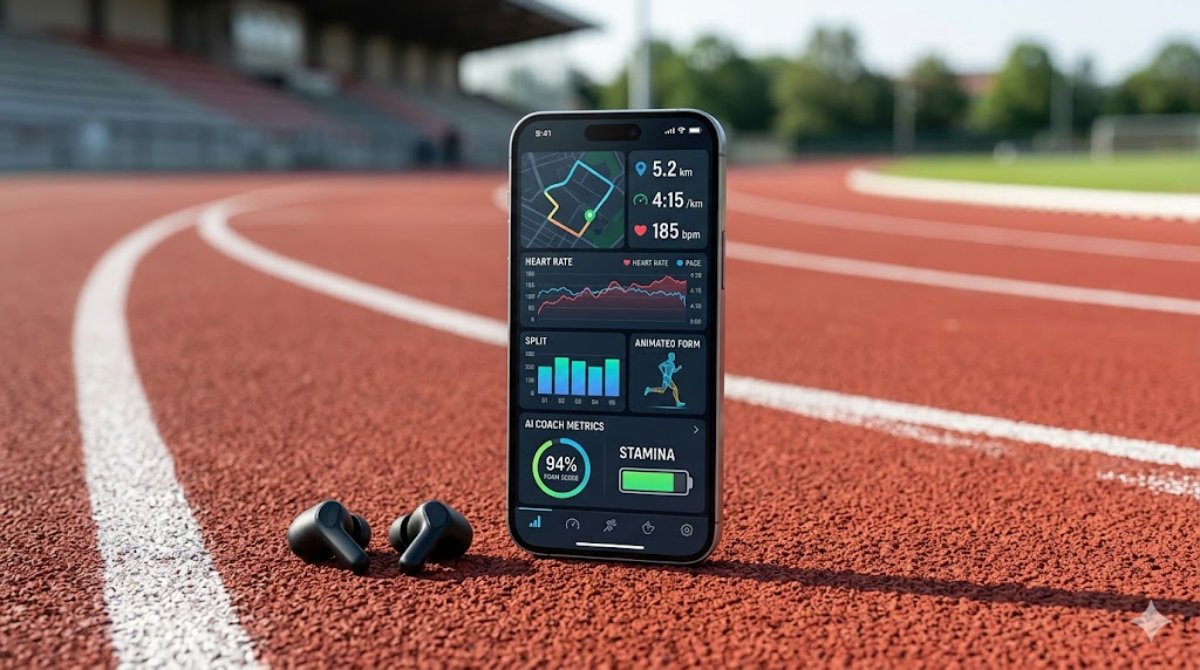
I've spent the last three years obsessing over running - both as a runner and as someone building technology for runners. During that time, I've tested nearly every AI coaching app on the market, and the landscape has changed dramatically.
AI running coaches are no longer a gimmick. The best ones genuinely adapt to your performance, adjust for missed workouts, and can outperform a static training plan in almost every scenario. But they're not all created equal.
Here's my honest comparison of the top AI running coach apps in 2026. Full transparency: I built one of them (The Running Genie), so I'll be upfront about that.
The independent option on this list
Adaptive Daniels and 80/20 plans that rebuild around the runs you actually complete. Free to download.


1. What makes AI coaching different from a static plan
A traditional training plan is like a recipe - it tells you exactly what to do on each day, regardless of whether you're sick, tired, or coming off a personal best. An AI coach is more like a human coach who watches your training and adjusts accordingly.
Good AI coaches do three things: they adapt workouts based on your recent performance and recovery, they detect patterns in your training (like overtraining signals or plateau periods), and they adjust goals as your fitness changes.
The key difference is feedback loops. A static plan can't see that you struggled on Tuesday's tempo run and therefore shouldn't do intervals on Thursday. An AI coach can.
Whichever app you land on, its pace prescriptions should trace back to your current fitness. A quick sanity check: plug a recent race result into a free VDOT calculator and compare the training paces it returns against what the app prescribes.
2. TrainAsONE
TrainAsONE has been in the AI coaching space longer than most. It uses machine learning to build fully personalised training plans that adapt daily based on your completed workouts.
What's great: Deep personalisation, good at adjusting for missed or modified workouts, supports multiple race goals simultaneously. The algorithm is mature and well-tested.
What's not: The interface feels dated compared to newer apps. The plan explanations can be confusing - it sometimes prescribes workouts without clearly explaining why. Pricing is on the higher end.
Best for: Data-driven runners who want maximum algorithmic personalisation and don't mind a less polished interface.
Pricing: Free basic tier, premium from ~$9.99/month.
3. Runna (now owned by Strava)
Update (April 2026): Strava acquired Runna in 2025. The core product is largely unchanged, but Runna is no longer independent - product direction now runs through Strava, which also ships its own AI feature called Athlete Intelligence. For a deeper look at what this means for existing users, read Is Runna still worth it after the Strava acquisition? or compare Runna alternatives side-by-side.
Runna exploded in popularity for good reason. It offers coach-designed training plans that adapt based on your feedback and performance - arguably the most polished UX in this space.
What's great: Beautiful interface, excellent onboarding, integrates directly with Apple Watch and Garmin. The plans feel human-crafted because they were originally designed by real coaches, with AI handling the week-to-week adaptation.
What's not: The AI adaptation is less aggressive than pure ML approaches - it's more "coach-designed plans with AI adjustments" than fully AI-generated training. Subscription-only, no meaningful free tier. Post-acquisition, your coach and your social platform are owned by the same company - a trade-off some runners prefer to avoid.
Best for: Runners who want a premium, polished experience and are comfortable living inside the Strava ecosystem.
Pricing: From ~$19.99/month. No free tier. May be bundled with Strava subscription in the future.
Try the independent option free
Adaptive Daniels and 80/20 plans that adjust to the runs you actually complete, not the ones the plan assumed. Free to download, so you can see if it fits before paying for anything.
4. COROS Training Hub
COROS has built impressive training intelligence into their ecosystem. If you own a COROS watch, the Training Hub provides AI-driven workout suggestions, recovery monitoring, and race predictions. (No COROS watch? A free race time predictor generates comparable projected finish times from any recent race result.)
What's great: Deep integration with COROS hardware means exceptionally accurate physiological data. The training load and recovery metrics are among the best in the industry. Free for COROS watch owners.
What's not: You need a COROS watch - this is hardware-locked. The AI is better at monitoring than prescribing. It'll tell you you're overtraining, but it won't build a full adaptive plan.
Best for: Runners already in the COROS ecosystem who want training intelligence built into their watch.
Pricing: Free (requires COROS watch, starting ~$199).
5. Garmin Coach
Garmin Coach offers free adaptive training plans built into Garmin Connect. The plans adjust based on your performance, and they're designed by respected coaches like Jeff Galloway and Greg McMillan.
What's great: Free with any Garmin watch. Plans are well-structured and the coaching methodology is sound. Deep integration with Garmin's physiological metrics (VO2 max, training status, body battery).
What's not: Limited to Garmin hardware. The AI adaptation is relatively conservative - it adjusts pace targets but doesn't fundamentally restructure your plan. Only supports 5K, 10K, and half marathon goals (no marathon or ultra plans).
Best for: Garmin users training for 5K to half marathon distances who want a solid, free coaching option.
Pricing: Free (requires Garmin watch).
6. The Running Genie
This is the site's own app, so take this section with appropriate skepticism. The Running Genie was built to connect with Strava, understand your running holistically, and give coaching insights without requiring specific hardware.
What's great: Works with virtually any setup - direct sign-in with Strava, Garmin, Polar, Suunto, or Apple Health, plus manual FIT/GPX/TCX upload for everything else. The AI analyses your complete running history to identify patterns, strengths, and risk areas. Personalised training plans that adapt based on actual performance. Detailed analytics designed to be understandable, not just comprehensive. New to structured training? The running app for beginners guide covers what to look for.
What's not: Still early-stage, so the community is smaller than established apps. Some advanced features are still being built. The app is strongest for runners who already have a training history to analyse.
Best for: Runners who want AI coaching intelligence layered on top of their existing tracking setup - whichever watch or platform that lives on.
The best AI coach is the one you'll actually listen to. Try free tiers first, and pick the app whose advice resonates with how you like to train.
7. How to choose the right one
If you already have a specific GPS watch, start with what's built-in (Garmin Coach or COROS Training Hub). You're already paying for the hardware - use it.
If you want a hardware-agnostic solution, Runna offers the most polished experience, TrainAsONE offers the deepest AI personalisation, and The Running Genie offers the best Strava integration.
For a more detailed feature-by-feature comparison, I put together an in-depth AI coach comparison page that covers pricing, features, and compatibility in detail.
Guides by device. If you already know what you run with, each of these goes deeper on one setup: what that device records well, what it does not, and the best way to pair it with an AI coach.
GPS running watches: Garmin, COROS, Polar, Suunto, Apple Watch, Samsung Galaxy Watch
Recovery and activity trackers: WHOOP, Oura, Fitbit
Platform: Apple Health
AI coaching has reached the point where it genuinely outperforms static training plans for most runners. The adaptive element - adjusting to your actual training, not just a theoretical schedule - makes a real difference in performance and injury prevention.
The technology will only get better. But remember: no app can replace the fundamentals. Consistency, proper rest, and listening to your body matter more than any algorithm.
The smartest training plan is the one that adapts to your life, not the other way around.
The independent pick on this list
Adaptive Daniels and 80/20 plans that rebuild around the runs you actually complete. Free to download.
