Marathon Training Apps Compared 2026: Free, Paid, and AI-Powered
Marathon training is 16+ weeks of hard, repetitive work. The right app can mean the difference between hitting your race time and limping to the finish. Here's how the top contenders stack up in 2026.
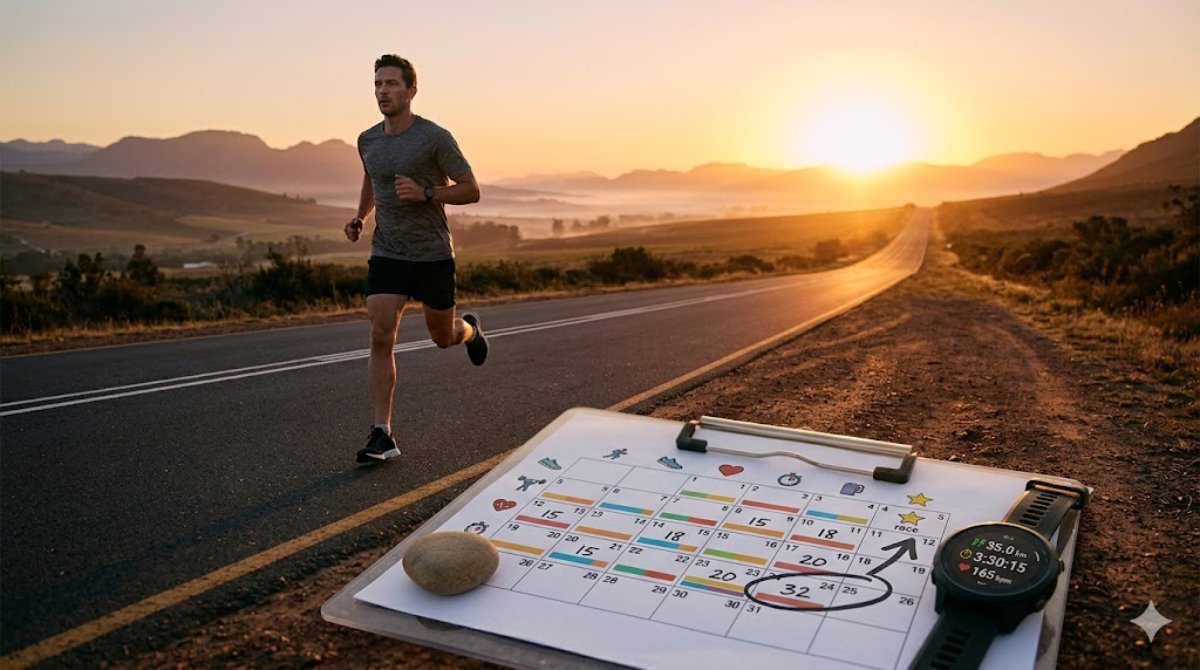
A marathon block is a serious commitment - 16 to 20 weeks of structured training, peak weeks of 50–80 miles, and a single race day where everything needs to come together. Picking the wrong app at week one can cost you the whole training cycle.
I've trained for marathons across India, run several myself, and tested every major marathon training app on the market - both as a runner using them and as someone who builds running tech. This post is a head-to-head comparison of what's actually worth installing for marathon training in 2026.
Full disclosure: I built The Running Genie, so I've put it on the list and tried to compare it honestly to the alternatives.
1. What separates a good marathon training app from a generic one
Marathon training is fundamentally different from training for shorter distances. The app you pick needs to handle four things well:
- Long run progression - gradually building from 12K runs to 30K+ over months. Easy to get wrong; injury risk is real.
- Tapering - most runners taper too aggressively or not enough. The app needs to manage this.
- Pace targeting - your marathon pace needs to come from your actual recent runs, not a fitness test from week 1.
- Adaptation under fatigue - by week 14, you're tired. Did you actually do the workout? Did you do it well? The app should adjust accordingly.
Apps that ace these four are worth your time. Apps that just give you a static PDF of "the marathon plan" are not.
2. Runna (now part of Strava)
Runna was acquired by Strava in 2025, and it remains one of the most polished marathon training apps available.
What's great for marathon training: Coach-designed plans with weekly AI adjustments. Nutrition timing built into long runs. Pace targets refresh as your fitness improves. Apple Watch and Garmin integration is excellent.
What's not: No meaningful free tier - you'll pay $19.99/month from day one or use a 7-day trial. Post-acquisition, Runna's roadmap runs through Strava, which is also building its own AI coach (Athlete Intelligence). You're betting on which lane Strava prioritizes.
Best for: Runners who want a premium polished experience and are comfortable paying through their entire training block.
Pricing: ~$19.99/month. 7-day free trial.
3. TrainAsONE
TrainAsONE has been doing AI marathon coaching longer than almost anyone. It uses ML to generate plans that adapt daily.
What's great for marathon training: Deep personalization. Handles missed workouts well - instead of just removing the workout, it restructures the surrounding week. Multi-goal support (you can train for a marathon and a tune-up race at the same time).
What's not: Interface looks dated next to newer apps. Plan explanations can be opaque - sometimes it'll prescribe a workout and the "why" is buried.
Best for: Data-driven marathon runners who want algorithmic depth and don't care about UI polish.
Pricing: Free basic tier. Premium ~$9.99/month.
4. Garmin Coach
Garmin Coach is free with any Garmin watch - but it has a glaring marathon limitation.
What's great: Free. Solid pace targets. Plans designed by named coaches.
What's not: Garmin Coach does not currently offer marathon plans. It supports 5K, 10K, and half marathon only. If you have a Garmin and want to use Garmin Coach for marathon training, you'll need to either repurpose the half marathon plan (not recommended for first-timers) or use a different app.
Best for: Marathon runners using Garmin hardware as a tracker only - pair it with one of the other apps below.
Pricing: Free with Garmin watch.
5. The Running Genie
This is my app. The Running Genie builds adaptive marathon training plans that pull from your actual running history - sign in directly with Strava, Garmin, Polar, Suunto, or Apple Health.
What's great for marathon training: Plans use your last 3–6 months of runs to set realistic pace targets - not a one-time fitness test. Adapts when you miss a workout or run a surprise PB. Long run progression is built around your specific race date and current weekly mileage. Free tier includes the full marathon plan with no time limit.
What's not: Smaller community than Runna or Strava. Strongest for runners who already have a training history on one of those platforms; new runners with no data get a more conservative plan.
Best for: Runners training for their second or third marathon who want AI coaching layered on top of their existing watch or platform, without paying $20/month.
Pricing: Free tier with marathon plans. Premium adds advanced features.
A marathon block that adjusts when the week does not go to plan
Adaptive Daniels and 80/20 marathon plans built from your real training history, rebuilt around the sessions you miss. Free to download.

6. Strava (with Athlete Intelligence)
Strava's Athlete Intelligence is the company's own AI coaching layer, available on Strava Premium.
What's great: Tight integration with the Strava activity you're already logging. Reasonable analysis of long runs and workout quality.
What's not: Not a full marathon training plan generator - it's more of a coaching layer on top of your existing training. If you're looking for "give me a 16-week marathon plan," Athlete Intelligence isn't quite that. Subscription required.
Best for: Marathon runners who already pay for Strava Premium and want AI insights on top - but who plan to source their actual training plan elsewhere.
Pricing: Strava Premium (~$11.99/month).
7. Side-by-side comparison
| App | Free marathon plan? | AI adaptation | Hardware-locked | Best for |
|---|---|---|---|---|
| Runna | No (7-day trial) | Yes | No | Premium UX seekers |
| TrainAsONE | Yes (basic) | Strong | No | Data-driven |
| Garmin Coach | No (no marathon support) | Light | Yes (Garmin) | N/A for marathon |
| The Running Genie | Yes | Yes | No | Strava, Garmin, Polar, Suunto, Apple Health users |
| Strava AI | No | Limited | No | Strava-only training |
For a more detailed feature breakdown across distances, see my full AI coach comparison.
8. How to actually choose
If you're training for your first marathon and want minimum friction: TrainAsONE free or The Running Genie free. Both give you a real adaptive plan without a paywall during your training block.
If you're training for a PB attempt and willing to pay: Runna's polished UX is the strongest tool you can buy. Use the 7-day trial first.
If you're a Garmin loyalist: Pair Garmin's tracking with The Running Genie or TrainAsONE for the actual plan, since Garmin Coach doesn't do marathon.
If you're comparing on price alone: Garmin Coach (HM only), TrainAsONE free, and The Running Genie free are the three permanent free options. Everything else is a paid subscription or a 7-day trial.
The best marathon training app is the one you'll still be opening in week 14, when you're tired and the long run is 32K. Pick the app whose interface and tone you actually enjoy at 5am - the rest is details.
9. Don't forget the calculators
Whichever app you choose, two calculators will sharpen your marathon prep:
- Marathon pace calculator - figure out target marathon pace from your recent race times
- Race time predictor - convert your latest 5K, 10K, or half into projected times across every race distance
Use these alongside your training app, not instead of it. Plans tell you what to run; calculators tell you how fast to run on race day.
Marathon training rewards consistency more than any other distance. The best app is the one that helps you show up - week after week, through tired Tuesdays and rainy long runs. Pick one, give it three weeks, and judge it on whether it makes the training feel manageable.
For more on what makes a good marathon plan, my marathon training plan that works post breaks down the structure most adaptive apps follow under the hood.
A great app makes your training feel inevitable. A bad app makes it feel like homework.
Build your marathon block from real data
Adaptive Daniels and 80/20 marathon plans generated from your own training history. Free to download.
